

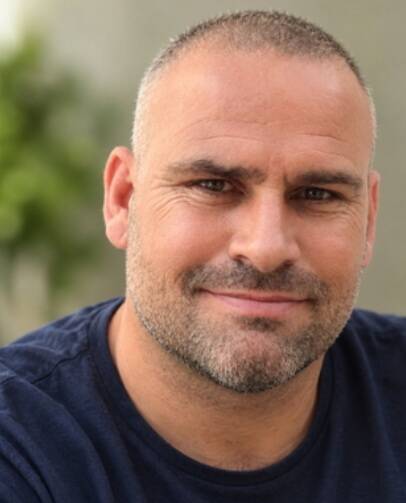
About me
A Little More About Me
My interest in psychotherapy comes from a genuine curiosity about people: how we experience the world, how we make sense of things and how our experiences shape the people we become.
I've always been interested in what sits beneath the surface of things. Why do we sometimes react in certain ways? Why do particular experiences stay with us? Why might we find ourselves repeating patterns, even when part of us knows they aren't helping?
I think there is often much more to someone's story than what we initially see. The ways we think, feel and behave don't happen in isolation. They can be shaped by our relationships, our past experiences and the ways we've learned to manage difficult situations.
I don't believe people should be defined by the difficulties they experience. I'm interested in understanding the person behind them, with all the experiences, strengths, struggles and contradictions that make each of us who we are.
This is something I try to bring into my work as a therapist: curiosity, openness and a genuine interest in understanding another person's experience.
My Background and Experience
My experience includes working in mental health settings, supporting people experiencing a range of emotional, psychological and behavioural difficulties.
Through this work, I've developed an appreciation of how complex people's experiences can be. What we see on the surface doesn't always tell us what someone is carrying underneath. Difficulties with anxiety, low mood, relationships or addiction can have much deeper roots, often connected to experiences and circumstances that may not be immediately obvious.
I have a particular interest in understanding the relationship between emotional pain and the ways we learn to cope. Sometimes behaviours that appear unhelpful can have developed for a reason. Rather than simply trying to change them, I think it is important to understand what purpose they may have served and what might be needed now.
How I View Therapy
I don't see therapy as about fixing someone or telling them how they should live their life. I see it as an opportunity to develop a deeper understanding of yourself, your experiences, and the patterns that may be affecting how you feel and how you relate to others.
Sometimes we become so used to thinking or behaving in particular ways that we stop questioning them. We may find ourselves repeating patterns in relationships, avoiding certain feelings or responding to situations in ways that don't quite make sense to us.
Therapy can give us the time and space to become curious about these experiences. It isn't always about finding immediate answers. Sometimes it is about slowing down, staying with something that feels important and allowing a better understanding to develop.
I also recognise that therapy can feel uncomfortable at times. Exploring difficult experiences takes trust, and I believe this needs to happen at a pace that feels manageable for you.
My Integrative Approach to Psychotherapy
I work using an integrative approach, drawing on Gestalt, psychodynamic and cognitive behavioural therapy (CBT).
For me, integration is about recognising that people cannot always be understood through one particular therapeutic approach. Different perspectives can offer different ways of making sense of our experiences, and I aim to bring these together in a way that is relevant to the person I'm working with.
Gestalt ideas can help us pay attention to what is happening in the present moment, including our feelings, thoughts, bodily experiences and relationships.
Psychodynamic thinking can help us explore how earlier experiences and relationships may continue to influence how we feel, behave and relate to others today.
CBT can offer ways to understand the connections between thoughts, feelings and behaviours, as well as practical ways to respond to difficulties.
These approaches are not used as a fixed formula. The focus remains on you, your experiences and what feels important to explore in our work together.
Qualifications and Professional Development
My academic background includes a BSc in Psychology and postgraduate study in Integrative Psychotherapy at Birmingham Newman University.
I believe that becoming a therapist is an ongoing process. It involves more than academic learning; it requires a willingness to reflect on yourself, remain open to different perspectives and continue developing your understanding of the people you work with.
I place importance on ongoing learning, professional reflection and developing my practice so that I can offer thoughtful and considered therapeutic work.
A Confidential and Supportive Space
I understand that beginning therapy can bring up uncertainty. Talking about personal experiences, relationships, or feelings that may have been difficult to share with others is not always easy.
I aim to create a space where you can speak openly without feeling judged or pressured to say more than you are ready to.
Confidentiality is an important part of our work. I will explain how this works, including the circumstances in which confidentiality may need to be limited, so that you know what to expect.
You don't need to arrive with everything figured out. We can take time to understand what has brought you to therapy and what you might want from the process.
Taking the First Step
You may have a clear idea of what you would like to explore, or you may know that something doesn't feel right. Either way, you don't need to have all the answers before getting in touch.
If you would like to learn more about working together, please contact me for an initial conversation. It is an opportunity to ask questions, discuss what you are looking for, and consider whether I might be the right therapist for you.